The largest of the three islands,
Gili Trawangan
attracts the majority of visitors, it is around thirty minutes boat ride
from the northwest mainland of Lombok and regular daily
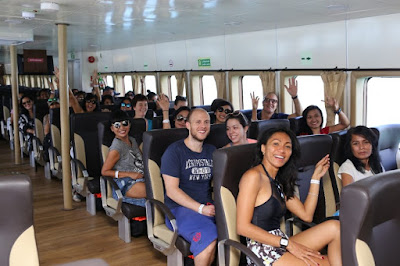
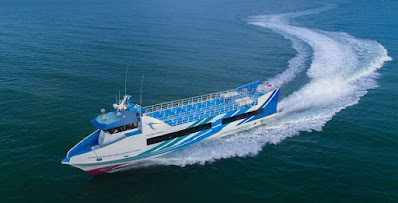
FASTBOAT BALI TO GILI depart
Bali directly to
Trawangan island and all boats stop off at Teluk Nare on mainland
Lombok as part of the return journey.
2. GILI TRAWANGAN
The
beaches of the
Gilis are still powdery white, the water a beautiful clear blue and they are positioned perfectly for sunsets over
Bali’s Mt Agung and sunrise over
Lombok’s Mt Rinjani. Thirty years ago the
Gili islands
were uninhabited and only discovered by the seafaring Bugis people from
Sulawesi. It was only a matter of time before the more adventurous
backpacker types discovered the islands and developed
Trawangan into a hippy
party paradise destination.
Unique to the
Gilis
all forms of motorized transport are still not allowed – meaning the
only way to get around is on foot, by bicycle and in pony carts known as
Cidomos.
One sign of change is the recent introduction four
ATM machines on the three Gili Trawangan to be found at
Hotel Vila Ombak and
Coral Beach.
It’s possible to follow the beach around the perimeter of the island
in around two hours on foot. The most popular stretches of beaches are `
Goodheart’ (the main stretch) and `
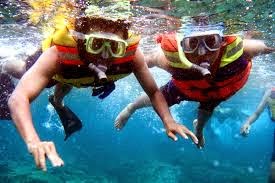
North Beach’ where the best snorkeling is to be found.
All dive centers and many shack operations lining the beaches rent snorkeling equipment for around IDR 50,000 for half a day.
Hawkers are not so much of an issue on
Gili Trawangan as in Bali; you’re likely to attract afriendly conversation from the locals rather than a hardcore sales pitch.
Beware of strong currents and do not attempt to swim between any of the islands.
With over twenty-five dive sites surrounding all three islands there
are opportunities to dive any of the Gilis regardless of where you base
yourself.
Gili Trawangan now identifies itself as a great holiday destination suitable for
families of all ages. Various new
hotels,
luxury villas, and
boutique bungalows
now cater to children and offer good value. Some have baby-sitting
services, and with lots of activities on the islands families are sure
to enjoy their
beach holidays to the full.
Most visitors stay on
Gili Trawangan for the facilities
and make the short hop out to the dive sites. Each dive school has its
own fleet of traditional outrigger boats that ferry divers offshore to
the walls and reefs where the best diving is to be found.
Aside from the obvious lure of
snorkeling and
diving, sunbathing and bar-hopping,
Gili Trawangan has a fair amount of distractions to keep visitors both amused and entertained throughout the course of their stay.
Fishing trips and charters can be made with the local outrigger
fishing boats who offer day trips with line fishing and trawling.
The Bio Rock is an environmental initiative set up by the
Gili Eco Trust that over the last six years has hosted an annual Bio Rock workshop on
Gili Trawangan.
The artificial metal reef cages are fed a constant voltage of
electricity to encourage coral regeneration and are a natural attraction
for all forms of marine life. There are now thirty three individual
projects in the
Gilis and it’s possible to
snorkel or
dive around them and there’s even a
PADI specialty course tailored to educate and involve a wider community.
Horse Riding with the boys at the
Stud Stables, is a great way to see the whole of the island. The perimeter of
Gili Trawangan can be walked along the beach and
Stud Stables have experienced and professional guides. Even though the
routes are very relaxed and not at all challenging the horse rides are
suited to more practiced riders.
3. GILI AIR
Although
Gili Air is closest to the
Lombok mainland it is the most overlooked of the
three Gili islands
in terms of development. However, that is all set to change as the
market here is geared very much towards the budget traveler and
tropical island explorer. A lot of visitors actually prefer the grass roots atmosphere of
Gili Air and the feeling of really being part of a close knit local community.
The circumference of
Gili Air island is travelable
by foot in around two and a half hours but be sure to pack some supplies
as you’re heading well off the beaten track.
As with
Gili Meno the pace of life is slow and endearing to those who really want to escape the hustle and bustle of the outside world.
The latest arrival to show how
Gili Air is very slowly catching up with
big brother Trawangan, is a new
ATM machine.
It is located on the east side in the middle of what you may call the
main strip, basically the concentration from the harbour to another
fairly new operation of bungalows called Bibi’s.
It takes all the usual cards like – Visa, master Card, even cirrus
and Maestro. With the new power cable from the mainland Lombok
installed, the time was right. It is a great advantage to visitors as
they don’t have to take bundles of cash, and even though there are still
some small “Mati Lampu” or power outages for a few hours here and there
it means people may stay longer.
4. GILI MENO
Only a kilometre from
Gili Trawangan and set in the middle of the three islets lies the real Robinson Crusoe experience of the
Gilis with some of the best beaches to be found.
Only two kilometres long and one wide,
Gili Meno is the smallest of the three
islands and by far the most peaceful and under developed. It’s possible to walk around the island along the beach or paths of
Gili Meno in under two hours.
Most visitors are attracted to
Gili Meno for the lure of total escapism and it is therefore very popular with honeymooning couples and adventurous castaway types.
The dining scene is predominantly local cafes with grilled fish on the beach as dusk approaches.
Lazing around in a hammock, reading books and playing chess with the friendly locals also ranks very highly on the daily
Meno agenda.
For
divers and
snorkelers, the
island boasts the infamous ‘
Gili Meno Wall‘ where during the day
turtles
freely swim by and giant gorgonian fans hang amongst the colourful
corals. At night divers can witness huge Moray Eels and the entertaining
Spanish Dancers, baby cuttlefish and a whole array of crustaceans.
GETTING to MENO
Most visitors arrive via
Gili Trawangan then jump on a connecting
island hopper boat for the fifteen minute trip over the channel.
5. LOMBOK ISLAND
Lombok, an island surrounded by fascinating beaches, glorious
diving and snorkelling opportunities, surfing and trekking, challenging
mountain climbs and villages rich with handicrafts, historical temples
and cultural island life. Lombok's got all this and more on an island
that's as beautiful as Bali without the madness of a myriad of tourists.
Yes, compelling yet not congested, paradise as you hoped it might be,
that's Lombok. So Lombok carries that sense of adventure that's not
handed to you on a package-designed plate. You can still get the old map
out, speak to a couple of knowing locals, then make up your own
experiences and memories.
Granted, the tourists are coming these days in
larger quantities, but there's a balance of ruggedness and convenience
that is beginning to put Lombok firmly on the map due to the glowing
posted journal entries and blogs of hundreds of wide-eyed returning
vacationers. Furthermore, the natural harbours of Telek Nara and Telek
Kodek in the northwest of Lombok represent a gateway to the stunning
Gili Islands, which are described in more depth here on